Jelous and the GTA VI mural: protest, fame or publicity?
Updated
In early November 2026, a graffiti writer who signs Jelous sprayed his name across a GTA VI ad mural in Brooklyn. Nothing suggests Rockstar or its agency set it up: Rockstar has said nothing, and he says it was spontaneous. It was not only a protest either. It is what graffiti has done since the 1970s: put your name where everyone is looking.
This post tells what happened, separates what is known from what is not, and explains why graffiti still speaks in the street, even now that it sells games and clothes.
What happened
The mural covered a whole wall in Williamsburg, Brooklyn, with the game's two leads. It was hand painted by Colossal Media, a company that paints ads. Less than a month later, someone wrote "JELOUS" in large letters over Lucia's legs. The Grand Theft Auto logo was left alone. In graffiti terms it is not quite a tag but a throw-up: bubble letters, outlined and quickly filled (see the glossary). Kotaku reported it on 5 November, when the photo was already one of the most popular posts on the writer's account.
Three days later he posted another photo, this time in Miami: his name in bubble letters on a billboard with the slogan "Welcome to Vice City", next to the Kaseya Center, the Heat's arena. Several outlets said it was the big sign on the arena's roof, for which Rockstar pays the county $975,000. His photo, though, shows a Clear Channel billboard beside the arena. No Miami outlet has confirmed it.
Did he work with Rockstar or its agency?
There is no evidence of that. Rockstar and Take-Two have not commented on either tag, or said whether the mural will be restored. None of the reports we read cites an agency, Colossal Media, or anyone from the game who says they know him. And he tells a different story.
What cannot be confirmed from outside is that the person behind the account is the one who painted: he posted the photos, but no outlet saw him paint.
Publicity stunt or statement?
Neither, fully. For it to be a stunt, someone would have had to pay for it, and nothing points to that. It is not a political manifesto either: Jelous does not talk about capitalism or the city, he talks about GTA and his name. And he says he likes the conversation it started.
That is graffiti in its oldest form. Ever since TAKI 183 made the newspaper in 1971, the rule has been the same: write your name where the most people will see it. A mural for a game millions are waiting for, two weeks before release, is the perfect spot. You can read it as criticism (an ad also takes over the street without asking) or as disrespect for the painters' work. Both readings exist inside the scene: on Reddit, a user who says he is an Italian graffiti writer called it "pretty disrespectful, even by graffiti standards".
The irony: an ad painted by people from graffiti
Colossal Media started in 2004 in Brooklyn. It was founded by an ad painter, Paul Lindahl, and by the publishers of Mass Appeal, Adrian Moeller and Patrick Elasik. Mass Appeal began in 1996 as a graffiti magazine. According to GTA BOOM, the same company painted Rockstar's first campaign for GTA: San Andreas, in 2004. Here, graffiti against the ad is graffiti against its own family.
Graffiti in video games
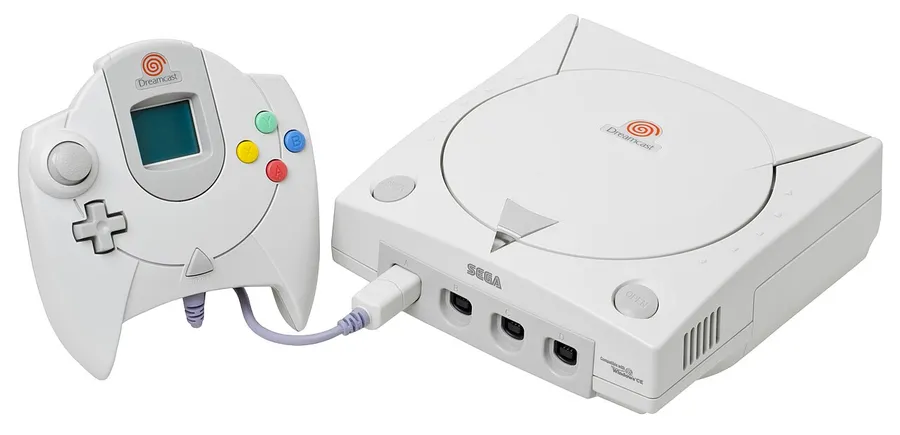
Getting Up shows the tension well. In 2005, New York revoked the permit for a launch party where writers painted fake subway cars. A federal judge ordered the city to give it back: saying the party would "incite" people to paint real trains violated free speech. In Australia, the game was refused classification and could not be sold.
When brands borrow graffiti
Graffiti that used to be scrubbed off now sells, and writers sue the brands that copy it without asking:
- 2014, Roberto Cavalli: Revok, Reyes and Steel sued over their San Francisco mural printed on clothes. It settled on secret terms.
- 2015, Moschino: Rime sued over his Detroit mural, printed on a dress Katy Perry wore to the Met Gala.
- 2018, H&M: the brand asked a judge to rule that illegal graffiti has no copyright, then dropped the suit after a boycott by the scene.
Guess and Macy's also settled in 2024. Most cases settle before trial, so whether illegal graffiti has copyright still has no clear ruling.
 HypebeastArtists Revok, Reyes and Steel are suing Roberto Cavalli for copyright infringement
 The Art NewspaperGraffiti artist to settle legal case against Moschino
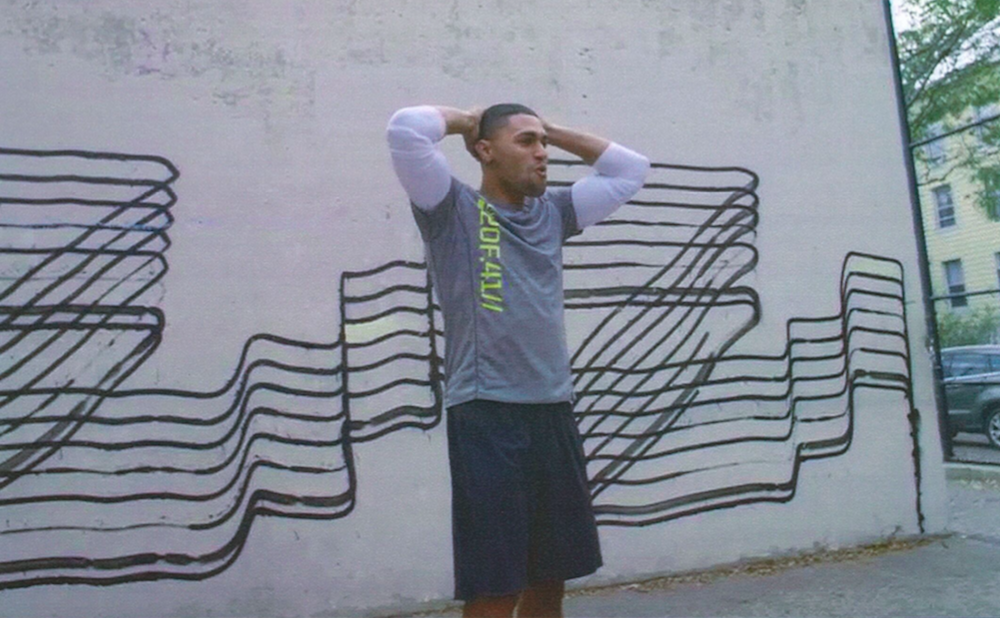 HyperallergicH&M lawsuit against street artist could have changed copyright law
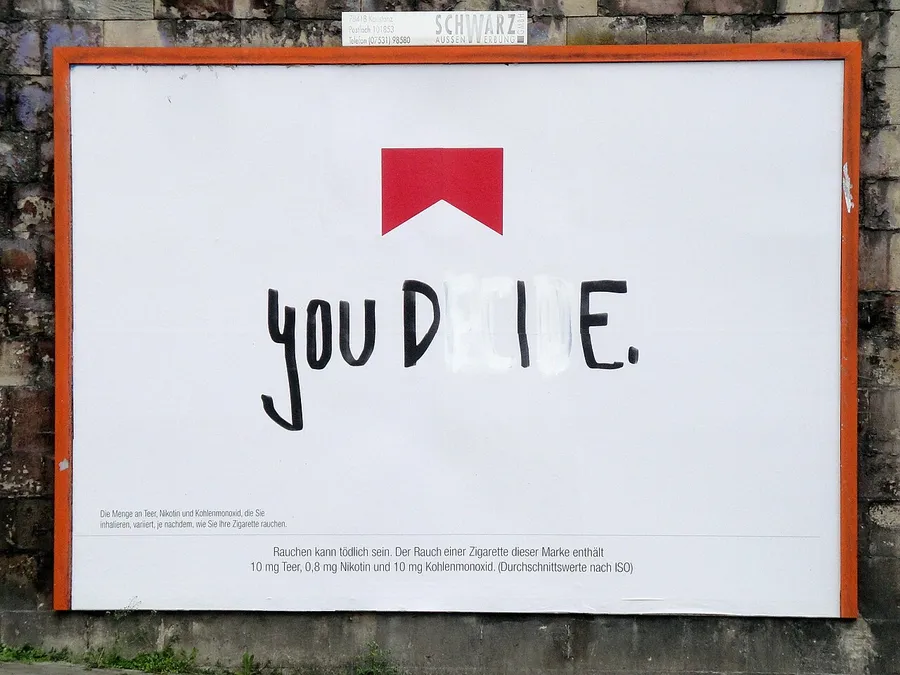
The protest answer exists too, and it is more organised than a tag. In November 2015, before the Paris climate summit, the Brandalism collective replaced more than 600 ads with works by about 80 artists, in the ad spaces of the company that sponsored the summit.
Why graffiti still matters
Graffiti went from trains to museums, to games and to ad campaigns. That did not empty it out: in the street, it is still the most direct way to say "I was here", sometimes against whoever pays for the wall. The GTA mural and Jelous's tag will both be gone soon. What remains is the record: who painted what, where and when.
In the app you play in the real street: you check in at the real wall, and every wall, legal or not, stays in an archive that belongs to everyone, even after it is painted over. We never show the exact spot of a piece painted without permission.
Last checked: 18 November 2026, on the pages linked below.
Sources
- Massive GTA 6 mural tagged by graffiti artist overnight, Kotaku (seen 18 November 2026)
- Post by @jelous.ktd, Instagram (seen 18 November 2026)
- Post by @jelous.ktd in Miami, Instagram (seen 18 November 2026)
- Interview with Jelous, Brick&Grit on Instagram (seen 18 November 2026)
- Graffiti artist sprays over GTA VI mural, r/GTA on Reddit (seen 18 November 2026)
- Graffiti artist tags another GTA 6 ad after Brooklyn mural backlash, Dexerto (seen 18 November 2026)
- GTA 6 mural tagger Jelous calls out the irony, GTA BOOM (seen 18 November 2026)
- Artist behind controversial GTA 6 mural tag shows up in Miami, VGTimes (seen 18 November 2026)
- Miami-Dade County to build "Welcome to Vice City" sign on Kaseya Center, WLRN (seen 18 November 2026)
- Colossal Media, Wikipedia (seen 18 November 2026)
- Mass Appeal mag achieves, well, mass appeal, MediaPost (seen 18 November 2026)
- GTA San Andreas 100% completion, GTA Base (seen 18 November 2026)
- Ecko Complex LLC v. Bloomberg, 382 F.Supp.2d 627 (S.D.N.Y. 2005), Artist Rights (seen 18 November 2026)
- Marc Ecko's Getting Up, trivia, MobyGames (seen 18 November 2026)
- Graffiti artists are increasingly lawyering up to fight fashion copycats, The Fashion Law (seen 18 November 2026)
- Guess, Macy's settle IP suit over artists' graffiti work, Law360 (seen 18 November 2026)
- Graffiti artist to settle legal case against Moschino, The Art Newspaper (seen 18 November 2026)
- H&M lawsuit against street artist could have changed copyright law, Hyperallergic (seen 18 November 2026)
- Artists Revok, Reyes and Steel are suing Roberto Cavalli, Hypebeast (seen 18 November 2026)
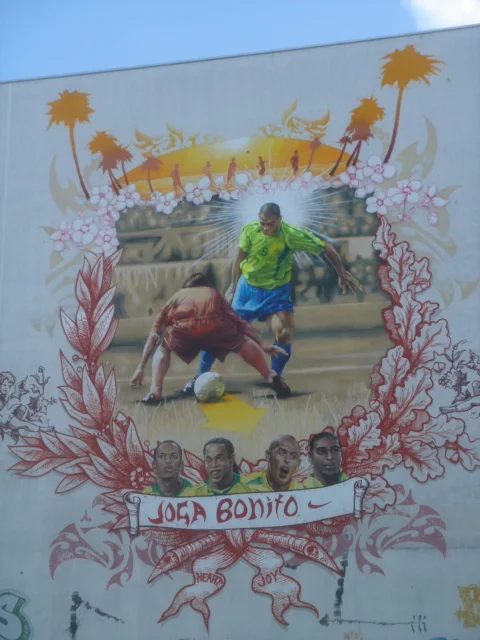
- Wandmalerei Friedrichstr 108, Joga Bonito, photo by OTFW on Wikimedia Commons, 8 December 2013 (seen 18 November 2026)
- Why artists installed 600 fake adverts at COP21, The Conversation (seen 18 November 2026)
Related: A short history of graffiti · What happens when a mural is painted over · Street art words