Graffiti photographers: the people who saved its history
Updated
Graffiti is made to be seen and then to vanish: trains get cleaned, walls get repainted. What we know of its history comes from a few people who photographed it in time, from Brassaï in 1930s Paris to Martha Cooper and Henry Chalfant in New York, and the US government's photographers. Often their photos are the only record left.
This post introduces thirteen of these photographers, says where their photos are kept today, and shows what their work means for anyone who photographs a wall.
Who photographed wall writing before graffiti had a name?
In Paris, Brassaï photographed the marks scratched and carved into walls for more than twenty years. MoMA showed the series in 1956, and his book Graffiti came out in 1960. The V&A in London holds 99 of his photographs.
In New York, Helen Levitt photographed the chalk drawings children left on the pavement from 1938 to 1948. Chalk does not last long, but her photos do.
In Mexico City, Tina Modotti photographed Diego Rivera's murals almost as soon as they were painted, at the painters' request. The photo archive of the UNAM keeps 115 of her prints, dated 1926 to 1929.
 Gaceta UNAMEl muralismo a través de la fotografía
Who photographed New York's trains first?
Several people started around the same time. The painter Jack Stewart photographed subway cars every weekend from late 1972 to early 1973; the Museum of the City of New York holds 31 of his photos. The artist Gordon Matta-Clark took more than 2,000 photographs in 1972 and 1973.
Jon Naar's photos filled The Faith of Graffiti, published in May 1974 with a text by Norman Mailer.
The US government took photos too. Its DOCUMERICA project hired about 70 photographers to record American life from 1972 to 1977. Their pictures of tagged trains and walls are public domain, so anyone may show them, as we do here.
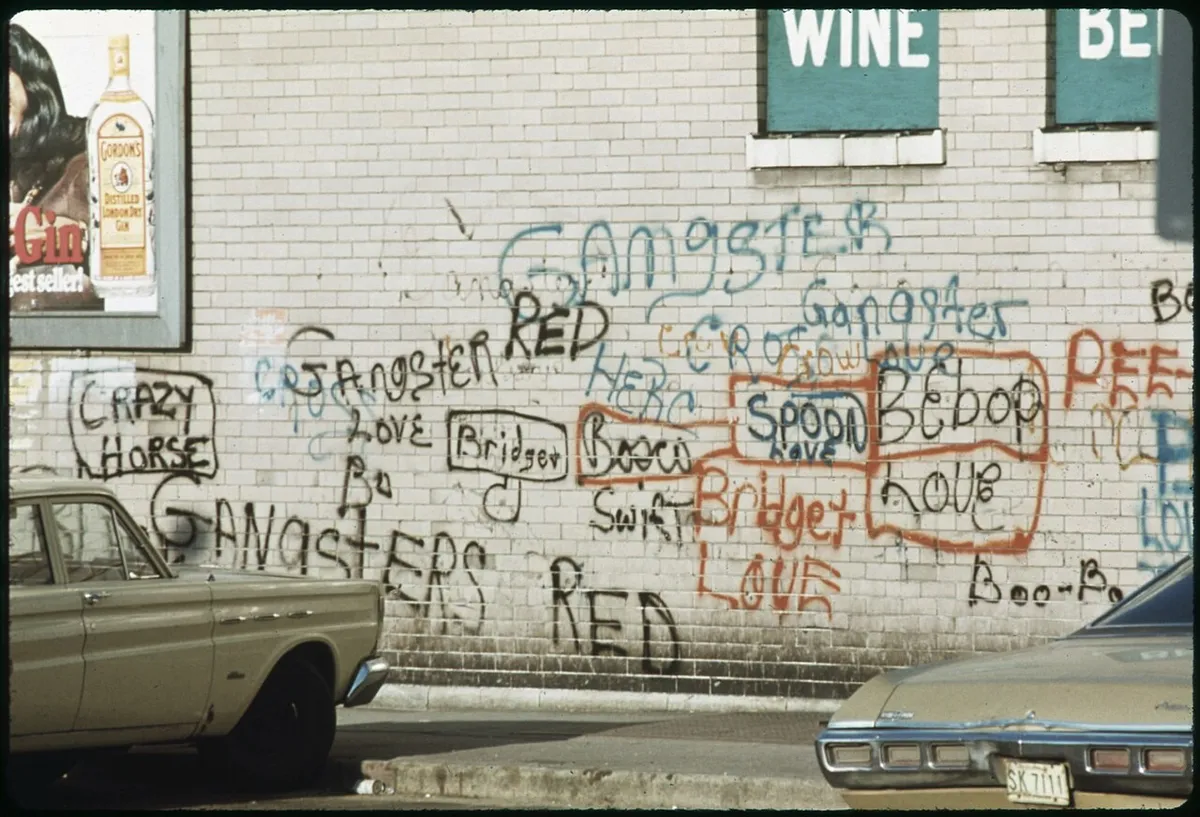
 White ColumnsGordon Matta-Clark: NYC Graffiti Archive 1972/3
Martha Cooper and Henry Chalfant
Martha Cooper was a staff photographer at the New York Post in the 1970s. A boy she was photographing, Edwin, showed her New York graffiti, and she never stopped. Her goal, in her words: "let's preserve this".
Henry Chalfant photographed painted trains from the early 1970s. "Part of the excitement of the graffiti scene was that nobody else was really documenting it," he told The Art Newspaper.
Together they published Subway Art in 1984. It sold badly at first, then became known as the graffiti "bible". Today Chalfant's archive is on show in Amsterdam, and Cooper's books and archival material form the Martha Cooper Library at Urban Nation in Berlin.
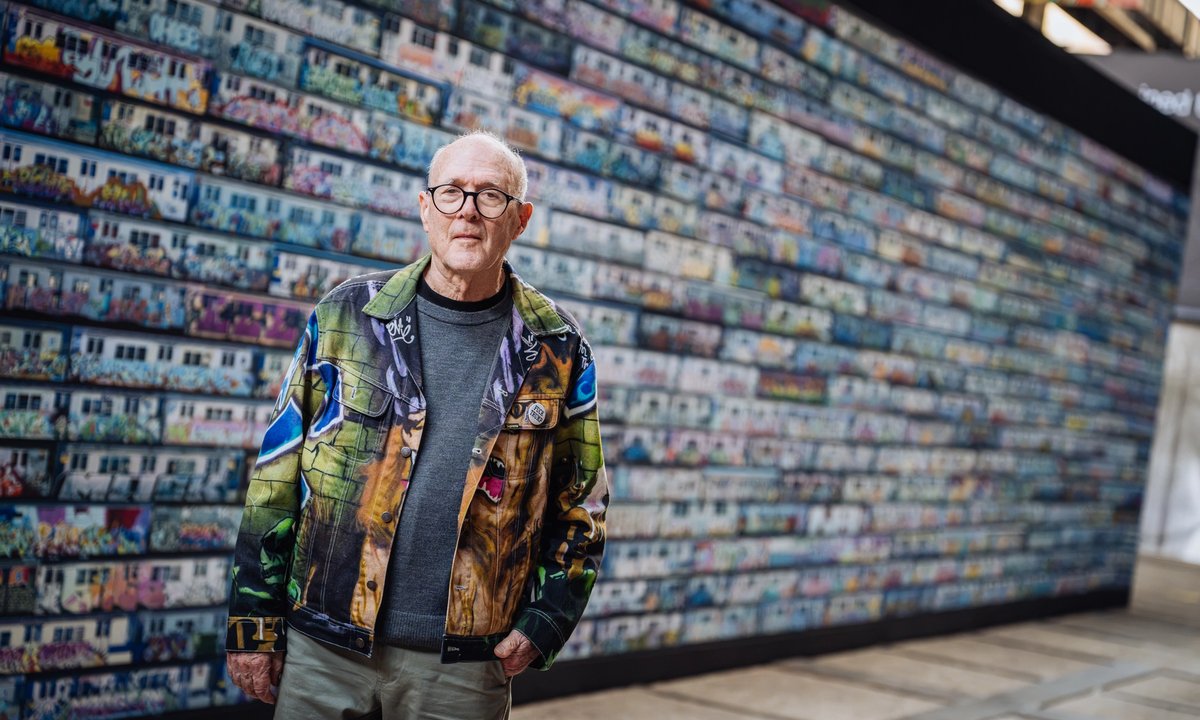 The Art NewspaperHenry Chalfant's legendary archive of New York graffiti goes on show for first time in Northern Europe
Beyond New York: Los Angeles, London, Santiago
In Los Angeles, the Italian photographer Gusmano Cesaretti published Street Writers: A Guided Tour of Chicano Graffiti in 1975, with black and white photos taken on the city's East Side. The Huntington Library acquired 238 boxes of his work.
In London, Roger Perry's The Writing on the Wall (1976) collected his black and white photos of the city's graffiti. It was reissued in 2015.
In Santiago, Armindo Cardoso photographed the murals of the Brigada Ramona Parra in 1970. After the 1973 coup, the brigades' walls were erased. Cardoso buried his negatives before he left; they were recovered, and Chile's National Library now holds more than 4,000 of them.
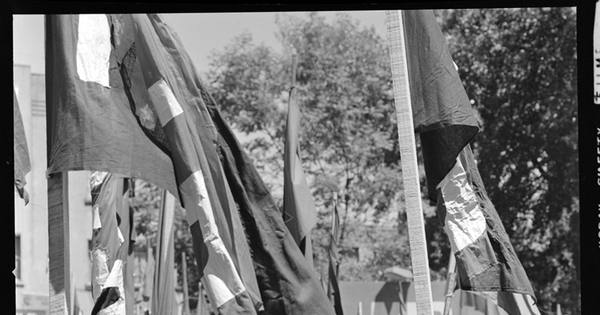 Memoria ChilenaArmindo Cardoso (1943-)
Who turned their photos into archives?
Some photographers gave their photos a second life in public archives. James Prigoff photographed murals from the mid-1970s and wrote Spraycan Art (1987) with Chalfant. In 2015 he lent 1,500 photos to Mural Arts Philadelphia, where they became the base of an archive of the city's murals.
Camilo José Vergara photographs the same places from the same spot over many years, murals included. The Library of Congress holds more than 5,000 of his photos.
Why it matters on the wall
Photos are not safe either. Streetfiles, a graffiti and street art photo site, shut down on 30 April 2013 and was only partly saved.
Every photographer here did the same thing: stand at the wall, take the picture, note the date, come back. That is what a check-in does. In the app you add a wall with its photo and GPS pin, check in within 150 m, and when a wall is gone, it stays in the archive with its story. We never show the exact spot of a piece painted without permission.
Last checked: 18 November 2026 (exhibition dates and where each archive is kept).
Sources
- El muralismo a través de la fotografía, Gaceta UNAM (seen 18 November 2026)
- 'Graffiti' photographs by Brassaï, V&A (seen 18 November 2026)
- Helen Levitt: Vintage Chalk Drawings 1938-1948, Fraenkel Gallery (seen 18 November 2026)
- Armindo Cardoso (1943-) and Brigadas Ramona Parra (BRP), Memoria Chilena, Biblioteca Nacional de Chile (seen 18 November 2026)
- Jack Stewart and the documentation of early graffiti writing, Museum of the City of New York (seen 18 November 2026)
- Gordon Matta-Clark: NYC Graffiti Archive 1972/3, White Columns (seen 18 November 2026)
- The Faith of Graffiti, Project Mailer (seen 18 November 2026)
- Searching for the Seventies, Prologue, US National Archives (seen 18 November 2026)
- Photographer Gusmano Cesaretti and graffiti artist Chaz Bojórquez, NPR (seen 18 November 2026)
- Italian photographer Gusmano Cesaretti's chronicles of East LA, Hyperallergic (seen 18 November 2026)
- Roger Perry's London letters, Eye Magazine (seen 18 November 2026)
- Collection of street photographer Martha Cooper, The Strong National Museum of Play (seen 18 November 2026)
- Martha Cooper Library, Urban Nation (seen 18 November 2026)
- Henry Chalfant's archive goes on show in Northern Europe, The Art Newspaper (seen 18 November 2026)
- STRAAT Museum brings the archive of Henry Chalfant to Amsterdam, STRAAT (seen 18 November 2026)
- Henry Chalfant interview, STRAAT on Instagram, and Boom Box Kids, Saatchi Gallery on Instagram (seen 18 November 2026)
- James Prigoff, who documented street art, dies at 93, Artdaily (seen 18 November 2026)
- Library of Congress acquires archive of Camilo José Vergara, Fine Books Magazine (seen 18 November 2026)
- Streetfiles, ArchiveTeam (seen 18 November 2026)
Related: A short history of graffiti · How to document street art before it disappears · What happens when a mural is painted over