A short history of murals: from cave walls to street art festivals
Updated
People have painted walls for at least 67,800 years. They began in caves, then moved to tombs, houses and churches, to public buildings in the 20th century, to neighbourhood walls from the 1960s, and to street art festivals today. One thing never changed: walls lose their pictures, to rockfalls, whitewash and new buildings.
This post covers 7 moments in the history of murals.
1. Caves: the first walls
The oldest wall art we know is a hand. On Muna, an island off Sulawesi in Indonesia, someone blew red pigment over a hand pressed on the rock at least 67,800 years ago. "At least", because the date comes from the mineral crust that grew over it, and the record keeps moving. Nearby, the oldest known painted scene, figures around a wild pig, is at least 51,200 years old.
In France, the walls of the Chauvet cave were painted in two periods, about 37,000 and 31,000 years ago. A rockfall sealed the entrance, which is why the paintings survived. Lascaux, found by four young people in September 1940, shows how dates move: the official site now places its paintings about 21,000 years ago, not 17,000 as older books say.
2. Tombs, houses and palaces
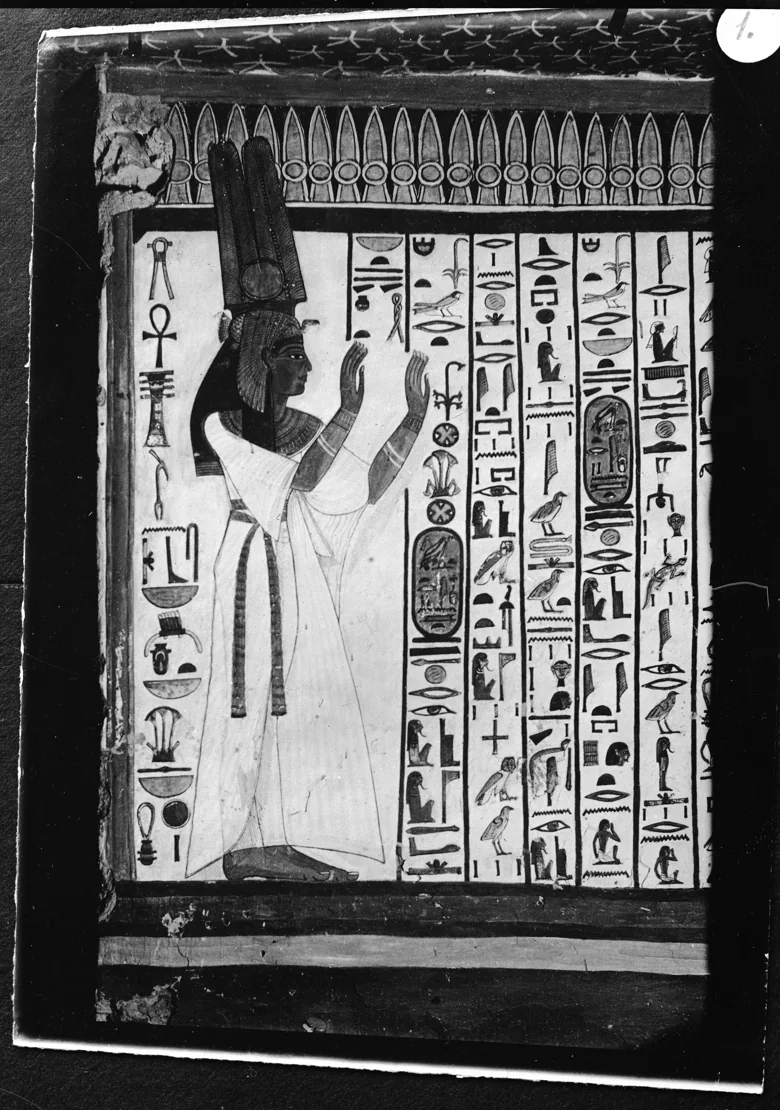
About 3,200 years ago, the walls of Queen Nefertari's tomb in Egypt were painted to last forever. They did not: by the 1980s, at least a fifth of the paintings were lost, mostly to carelessness and vandalism. The photo above was taken in the first years after the tomb was opened in 1904: an early archive of a wall.
Murals were not only for the dead. In Pompeii, the Villa of the Mysteries has a painted ritual running around three walls of one room, from about 80 to 70 BC. In Mexico, the Maya murals of Bonampak, painted between about AD 600 and 850, show hundreds of dancers, musicians and warriors: news and politics on a wall.
3. Fresco: painting on wet plaster
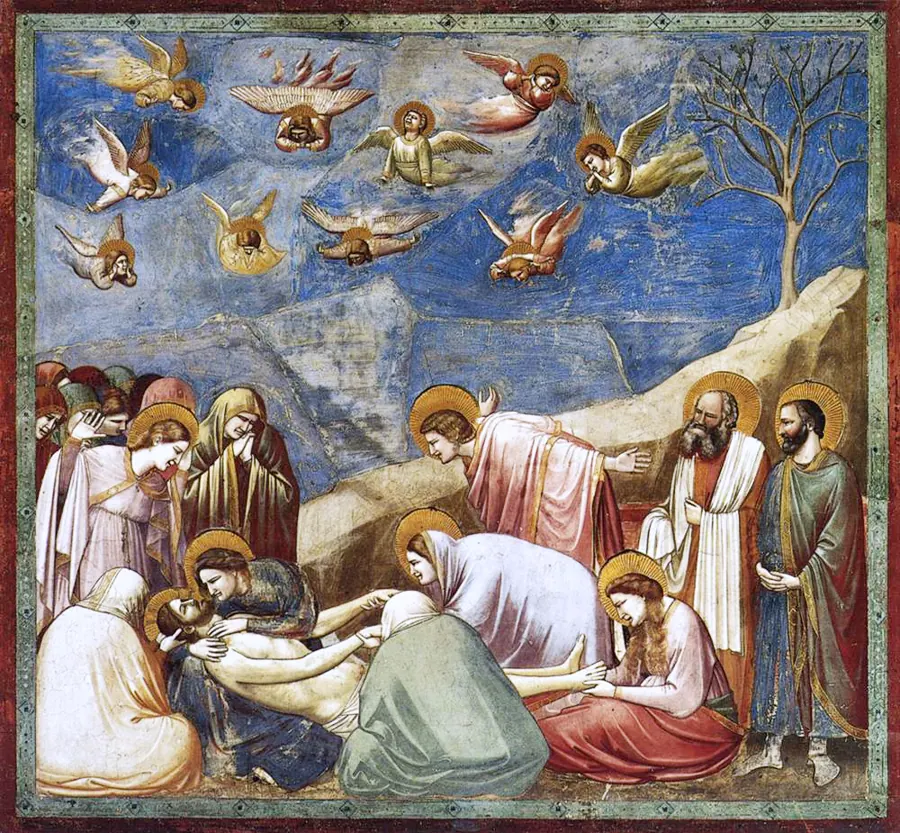
In a fresco, the painter brushes pigment onto fresh, wet plaster, and the colour binds to the wall as it dries. You only plaster what you can paint that day, so the work is split into giornate, days. Look closely at an old fresco and you can sometimes see the seams.
Giotto painted the Scrovegni Chapel in Padua in about two years, 1303 to 1305. In Rome, Michelangelo finished the Sistine Chapel ceiling in 1512, and his Last Judgement, completed in 1541, replaced earlier frescoes on the altar wall. Even the most famous mural in the world painted over older ones.
4. Murals for the people, 1920s and 1930s
In 1922, Diego Rivera painted La creación in a Mexico City school, and Mexican muralism began: public walls that told the country's history to everyone. Our post on muralism in Latin America tells that story.
In the United States, the Federal Art Project (1935 to 1943) gave work to artists during the Depression, and murals in public buildings were among its main works. Many still hang in schools and post offices.
5. Neighbourhood walls, 1967 to 1984
- Chicago, 1967: artists painted the Wall of Respect on a South Side building, with Black heroes from music, sport and politics. It lasted only a few years, but started a movement.
- San Diego, 1970: residents occupied land promised as a park, and painted it. Chicano Park now has one of the largest collections of outdoor murals in the United States.
- Los Angeles, from the mid-1970s: Judy Baca and more than 400 young people painted the Great Wall of Los Angeles, about half a mile of California's history.
- Philadelphia, 1984: an anti-graffiti program paid graffiti writers to paint murals. Today it is Mural Arts.
6. Legal walls and festivals, 1997 to today
Graffiti brought spray paint and letters to murals (our short history of graffiti tells how). Then came festivals: Meeting of Styles from a hall of fame in Wiesbaden, Germany, in 1997, Upfest in Bristol in 2008, Wynwood Walls in Miami in 2009, and POW! WOW!, born in Hong Kong in 2010. Cities now invite artists to paint whole districts.
Why we keep archives
For 67,800 years, walls have carried pictures, and lost them. Most murals end the same way: painted over, torn down or faded. What survives is the record: a photo, a date, the artist's name. That is what this archive keeps. Photograph the walls around you while they are there, and they stay in the archive, even once they are gone.
Last checked: 18 November 2026, on the pages linked below.
Sources
- Oldest known cave art: hand stencils in Indonesia, NBC News (seen 18 November 2026)
- Chauvet: two periods of human activity, PNAS (seen 18 November 2026)
- Dating the figures of Lascaux, French Ministry of Culture (seen 18 November 2026)
- Tomb of Nefertari, Getty Conservation Institute (seen 18 November 2026)
- Villa of the Mysteries, Pompeii Archaeological Park (seen 18 November 2026)
- Fresco, The National Gallery (seen 18 November 2026)
- History of the Sistine Chapel, Vatican Museums (seen 18 November 2026)
- San Ildefonso, cuna del muralismo mexicano, Gaceta UNAM (seen 18 November 2026)
- Federal Art Project, Tate (seen 18 November 2026)
- The Wall of Respect and Chicago's mural movement, Block Museum (seen 18 November 2026)
- The Great Wall of Los Angeles, SPARC (seen 18 November 2026)
- Rockefeller's destruction of the Rivera mural, PBS American Experience (seen 18 November 2026)
- Judge awards $6.7 million to 21 graffiti artists, NPR (seen 18 November 2026)
Related: A short history of graffiti · What happens when a mural is painted over · How to document street art